Every year on October 31, something magical happens. Streets glow with carved pumpkins, costumes come to life, and an atmosphere of mystery and excitement fills the air. But where did Halloween begin, and why do we celebrate it?
From ancient seasonal traditions to modern costume parties, Halloween has travelled a remarkable journey. Today, it offers a chance to share stories, express creativity and connect with people from different cultures.
Halloween has roots in Samhain, an ancient Celtic festival marking the end of the harvest and the beginning of winter. More than 2,000 years ago, communities in Ireland, Britain and other Celtic regions gathered for seasonal observances connected with the changing year. Some traditions involved beliefs about spirits and the boundary between the living and the dead. As customs changed across centuries, the season became linked with Christian observances such as All Saints’ Day on November 1. The name Halloween comes from All Hallows’ Eve, the evening before All Saints’ Day.
Masks and disguises have long been associated with autumn festivities, supernatural beliefs and visiting traditions. Today, costumes are primarily an invitation to be imaginative. Ghosts, witches, vampires, movie characters and handmade creations all have a place at Halloween. For students, dressing up can be an easy way to share a laugh, express a personal style and join the celebration.
The carved pumpkin is now Halloween’s best-known symbol. Jack-o’-lanterns are connected to Irish folklore, including tales of a wandering figure often called Stingy Jack. Earlier lanterns were carved from vegetables such as turnips. As related traditions spread in North America, pumpkins became a popular alternative because they were plentiful and easier to carve. Their glowing faces now decorate windows, doorsteps, schools and public spaces.
Modern trick-or-treating grew from a mixture of older customs: dressing in disguise, visiting households, performing for food or gifts and celebrating with neighbours. Today, children in many communities walk from door to door in costume to collect sweets. Although trick-or-treating is especially prominent in North America, the idea of sharing treats and celebrating together has travelled around the world.
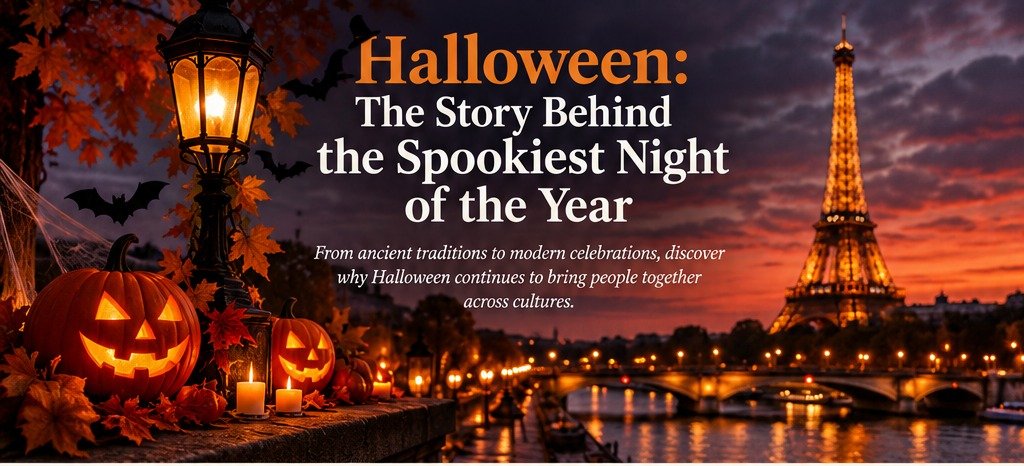
Halloween is not a French public holiday, but it is increasingly visible in themed attractions, costume parties, shops and student gatherings. Paris also has a naturally atmospheric backdrop: the Catacombs, Père-Lachaise Cemetery and the Phantom of the Opera stories surrounding Palais Garnier all inspire seasonal storytelling. There is an important distinction in France: La Toussaint (All Saints’ Day) falls on November 1 and is a public holiday. Many families visit cemeteries and remember loved ones at this time. Halloween is generally playful; La Toussaint is associated with remembrance and reflection.
On an international campus, Halloween is more than costumes and candy. It can be a moment for students from different backgrounds to learn about one another, share traditions and strengthen friendships outside the classroom. DIY workshops, costume days, quizzes, treasure hunts, films and student-led celebrations encourage creativity, teamwork and communication — qualities that matter in college and beyond. Participation can take many forms, from enjoying the history to joining the activities.
Halloween has evolved from seasonal observances into a widely recognised cultural event. At its best, it is about imagination, storytelling, community and having fun together. For students in Paris, it is also an opportunity to discover a different side of the city while making memories with classmates. This October 31, whether you choose a costume, carve a pumpkin, watch a scary film or celebrate with friends, remember the centuries of stories behind the tradition. Happy Halloween!
 Établissement d'enseignement supérieur privé


Copyright © 2026. MASH INTERNATIONAL SCHOOL OF BUSINESS (MISB) Conditions générales d’utilisation